


-
- Discounted Collections
- Website Specials
- New for 2026!
- Tulips
- Narcissi
- Allium
- Anemone blanda
- Brodiaea
- Camassia
- Chionodoxa
- Corydalis
- Crocus
- Dichelostemma
- Eranthis
- Eremurus
- Erythronium
- Fritillaria
- Galanthus
- Gladiolus
- Hyacinths
- Hyacinthoides
- Ipheion uniflorum
- Dutch Iris
- Rock Garden Iris
- Ixiolirion
- Leucojum aestivum
- Muscari
- Ornithogalum
- Oxalis
- Puschkinia
- Scilla
- Triteleia
- Lilies
- Peonies
- Amaryllis
- Paperwhites
- Tender Bulbs
- Anemone Giants
- Tecolote Ranunculus
- Freesias
Triteleia Rudy
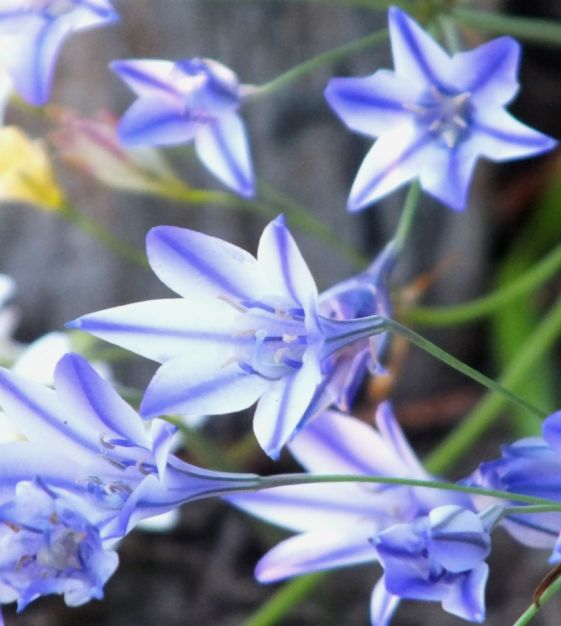
This fabulous cut flower is best grown in moist, fertile, well-draining soil in full sun to partial sunlight (never shade) with winter and spring moisture and summer dryness. Rudy has relaxed stellates of delicate, star-shaped, pale blue flowers with darker indigo-blue midveins and grass-like foliage. You won’t believe the huge impact of this delicate flower.
Previously classified within the Brodiaea genus, this northwestern U.S. native is now classified within the distinct Triteleia genus. Other U.S. Northwest natives include Brodiaea, Camassia, Dichelostemma and Erythronium. Top size I corms. Full to partial sunlight. Bloom time in horticultural zone 5: May/June. Plant 4" deep and 3" to 4" apart. HZ: 6-9. Height: 14" to 18".
Triteleias are The Art & Soul of Spring.
Triteleia Horticultural Tips
Stinze Plantings
- Information
A northwest U.S. native, perennializing Triteleia are best planted in substantive clusters for the best effect. Also known as The Fool’s Onion, they yield delicate, airy umbels of upright, bell-shaped or star-shaped florets on thin, wiry stems, and grass-like foliage. They are best grown in fertile, well-draining soil in full sun to bright shade with winter and spring moisture followed by summer dryness. Over time, they may self-seed and naturalize. They are terrific, long-lasting cut flowers. Bloom time: May/June. Plant 4” deep and 3” to 4” apart. Top size corms. May/June. HZ: 6-9.
A northwest U.S. native, perennializing Triteleia are best planted in substantive clusters for the best effect. Also known as The Fool’s Onion, they yield delicate, airy umbels of upright, bell-shaped or star-shaped florets on thin, wiry stems, and grass-like foliage. They are best grown in fertile, well-draining soil in full sun to bright shade with winter and spring moisture followed by summer dryness. Over time, they may self-seed and naturalize. They are terrific, long-lasting cut flowers. Bloom time: May/June. Plant 4” deep and 3” to 4” apart. Top size corms. May/June. HZ: 6-9.
